The Feldenkrais Method
Developed by Dr. Moshe Feldenkrais in the mid-20th century, the Feldenkrais Method® grew from his lifelong investigation into movement, learning, and human development.
At its heart is a simple idea: our capacity to learn and adapt continues throughout our lives. By paying closer attention to how we move, we can uncover habits, explore new options, and find more effective ways of doing the things that matter to us.
Moshe Feldenkrais
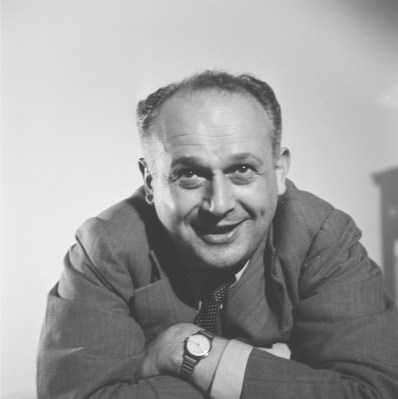
Moshe Feldenkrais
© International Feldenkrais® Federation
Dr. Moshe Feldenkrais (1904–1984) was a physicist, engineer, martial artist, and pioneering thinker whose unusually broad background shaped his approach to human movement and learning.
Trained in mechanical and electrical engineering, Feldenkrais went on to study physics in Paris and worked in the laboratory of Nobel Prize–winning physicist Frédéric Joliot-Curie. He was also a devoted student of martial arts, studying with Jigoro Kano, the founder of judo, and becoming one of the first Europeans to earn a black belt in the discipline.
A serious knee injury became a turning point in his life. Faced with uncertain surgical outcomes, Feldenkrais began an intensive investigation into his own movement, drawing on his knowledge of physics, anatomy, martial arts, psychology, and human development. Through careful observation and experimentation, he found ways to restore his own function and began developing the ideas that would eventually become the Feldenkrais Method.
“Make the impossible possible, the hard easy, and the easy elegant.”
- Moshe Feldenkrais
A Different Approach
The Feldenkrais Method is a process of learning, and perhaps its most meaningful lesson is that we are capable of change. There is no single right way to move or to be. We can try something differently, find another option, and develop our own unique ways of doing things.
Lessons create the conditions for this kind of discovery. We move slowly and within a comfortable range. We rest. We try variations, sometimes only in our imagination, and notice subtle differences along the way. Rather than striving toward a goal or a finish line, we gradually fill in the gaps in our own self-image and develop a fuller sense of ourselves.
Through this process, we are reminded that we have choices, that we are not stuck, and that our capacity to learn continues throughout our lives.